

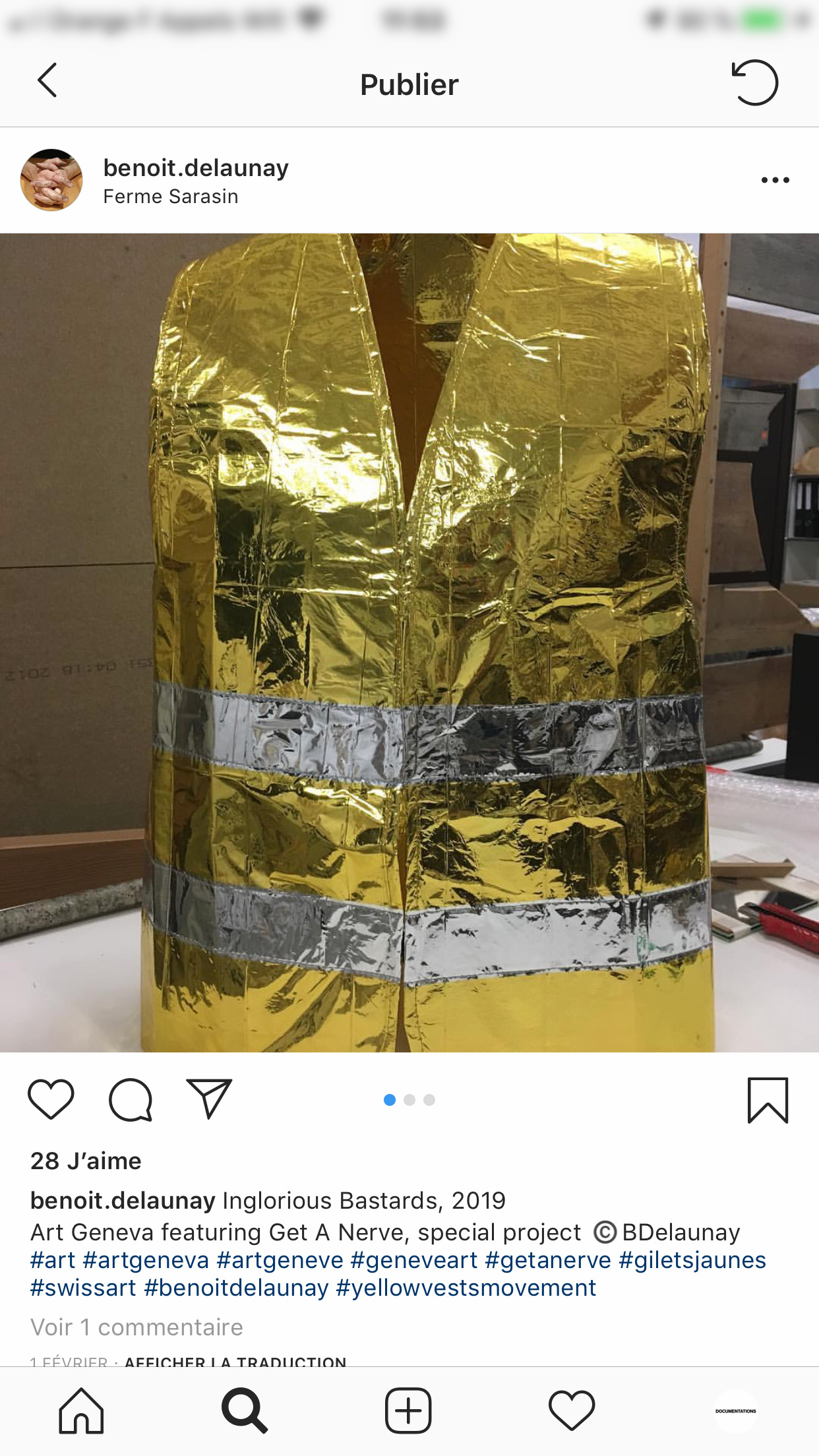
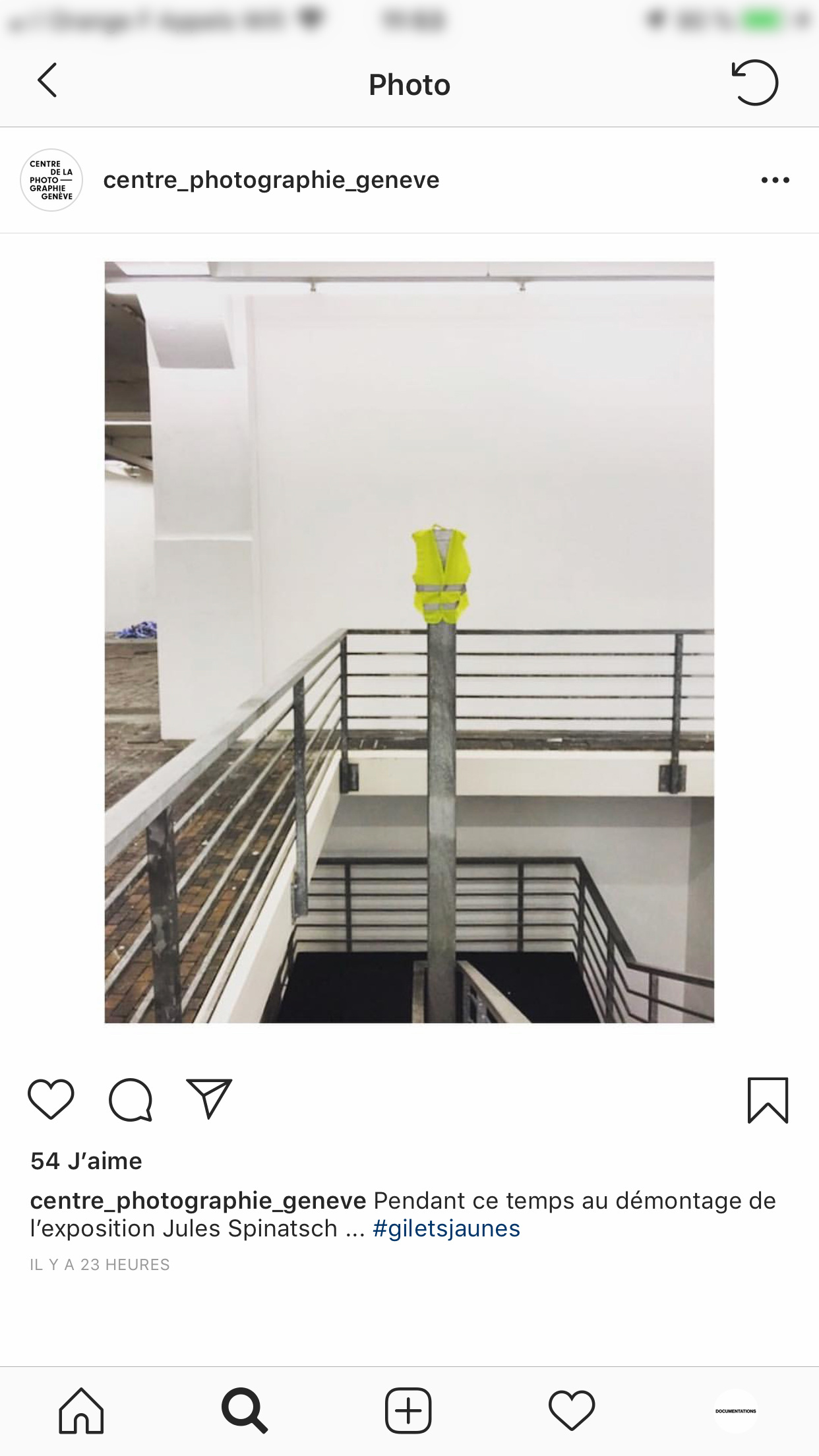
While in France thousands of people have been protesting for several months for more dignity and tax justice, occupying roundabouts, being gassed and mutilated during demonstrations, being arrested, killed and dragged to court, some artists and curators find it opportune to represent and display the « Yellow Vests ».
It is therefore urgent to question the difficulties and even the discomfort of the « art world » in positioning itself within the current debates. What does it mean to produce objects that represent struggles which call upon each and every one of us to take a stand?
This would suggest that we could still belong to a representation regime where people would take offence or welcome an artist’s audacity. Beyond even a well-known opportunism, we face a truly archaic and conservative view of the role we have to play both individually and collectively.
The problem is not even so much in the use of the unifying symbol of a « movement », which exists only through the mere wearing of this technical garment. It comes above all from logics of representation whose critical emptiness appears blatantly obvious. They are reality substitutes, objects that sterilize the thought, that are created to distance us from our own daily realities, and make us feel like we’re not really touching them while thinking we’re exceptional. This does not require any debate, nor any discussion, at best a smirk or annoyance.
A cynical posture would require being subversive and jubilant, but that’s not even what we’re talking about anymore. These vaguely conceptualized artifacts are proof that we have to rethink our models from the ground up. Perhaps when they have slipped into a yellow vest, exposed themselves as individuals and participated in genuine debates of ideas, they will understand that we can no longer support production methods that are making the paycheck to the market and of artistic institutions. To let us believe that we would be mere spectators weakens our critical thinking and our ability to act. It’s dangerous and reductive.
@AAA