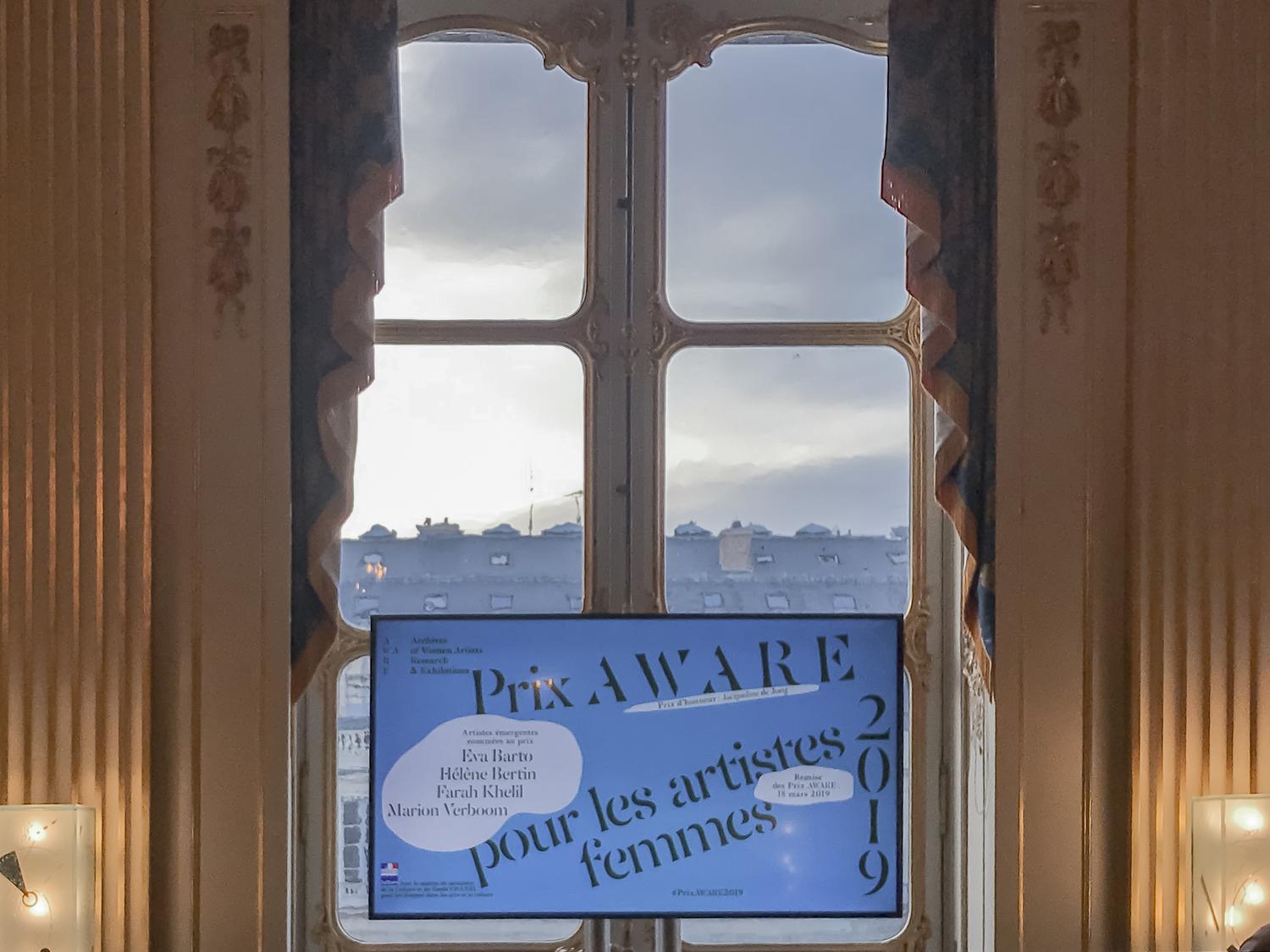
Today, Tuesday 19.03.2019: A powerful text is being sent to the organizers of the Aware 2019 Prize and the Minister of Culture, following the award ceremony at the Ministry of Culture and Communication, on the working conditions of artists, against a liberal feminism that has become an oppressing tactic towards other women.
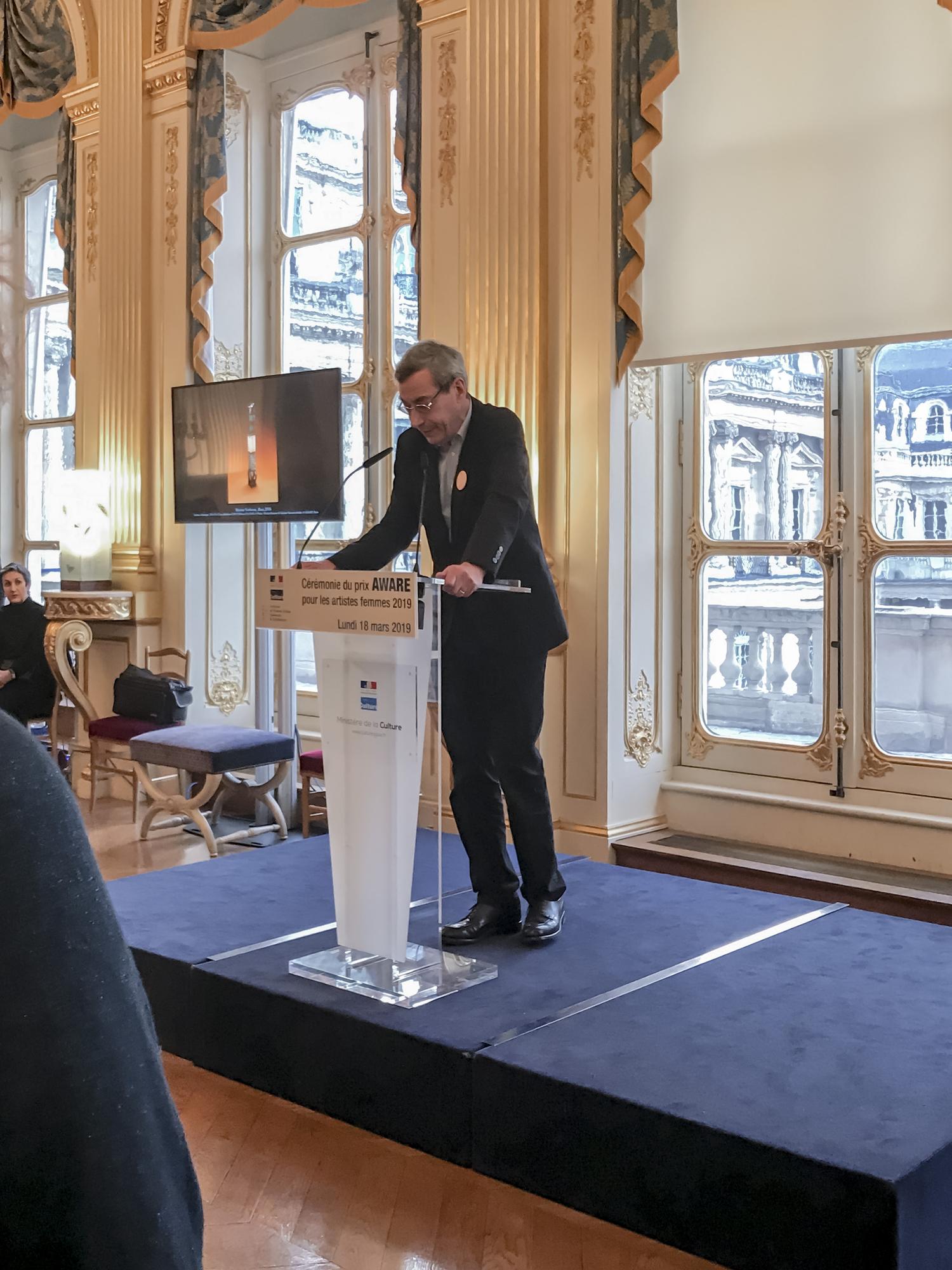
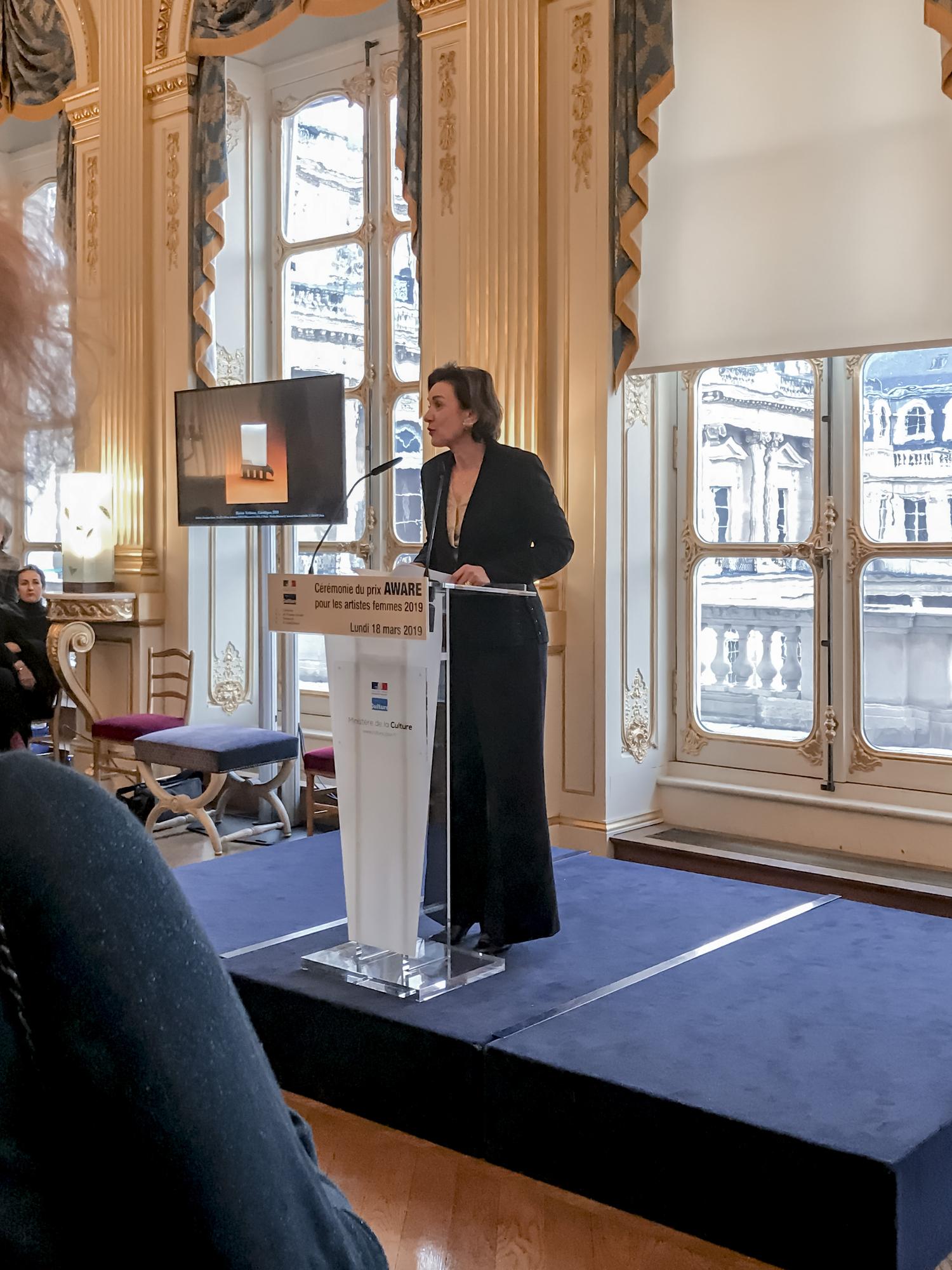
« The fact that women are less represented, less supported, less considered, that their works are less sold, that they are less awarded, is a fact, no one learns about it. The consequence, in addition, is that to increase their visibility, they must be put in competition. For the Ministry to acknowledge this reality is one thing, an exception that is supposed to reassure us all. Acknowledging the demands of artists in general, women and men, is another.
Let us take advantage of this time to clarify our claims. Those who fight in this way share the desire to be listened to and recognized for the practice we practice without schedules, vacations, salaries, without paid leave and never having our income secured. This reality is especially true for women who, in a highly competitive environment, are still under-represented by the market and the institutions today. And when they « succeed », many are under pressure from an environment that does not accept failure and where the possibility of combining precarious work, flexibility, residences and family life is almost non-existent.
Intermittent workers knew how to obtain recognition for their activity as a job in its own right, financially covering research time when paid work is not available. The recent creation of SODAVI and the CNPAV, which propose that these representatives express their grievances, is not followed by any facts. The French government subsidizes Fracs et art centers but systematically ignores the remuneration and status of artists. Mr Riester, the current Minister of Culture, on 21 February 2019, gave the following reasons for voting against a fund to support precarious artists: « Because we are actively working to remedy the precariousness experienced by artists-authors and because many direct aids to them are already intended, we are not in favour of creating a fund to remunerate them independently for the distribution of their works. »
It seems important to remind the Minister that an artist in France does not make any or very little profit from his works. He or she gets at best 500 euros in fees for a group exhibition in an institution. To let the opposite be thought is to ignore the situation and give the market the opportunity to set the rules of the game. This says a lot about how the state views our precariousness. These one-off grants distributed to a minority of artists (how are they chosen?), these residencies or merit awards belong to a competitive logic.
In this system, which the Minister appears to defend, artists are ultimately evaluated by means of « advocates ». They are only called at the very last minute to retrieve a potential award. A reward that, instead of rethinking the very models that underpin our profession, distorts the feminist cause for communication purposes.
In wanting to offer them a piecemeal distinction, you forget the necessity to value them from the very start, to estimate the very value of the work provided. This state de facto is no longer acceptable. The legacy of the artist’s myth (unfortunately often taken up by the artists themselves), a romantic figure who agrees to starve to death with devotion to her or his work, has a terrible impact on reality and contaminates any possibility of recognizing her- or himself in the current struggle.
It is up to elected officials to dare to debating the issue of artistic work in the Assembly; it is up to artists to stop excessive individualism, to block and dare to refuse, to say NO to their precariousness by asserting their rights. Today, it is an emergency, and even a duty. The current situation is far too serious to wisely accept this sometimes late and sporadic recognition.
Feminist and non-women’s recognition would consist in encouraging the women’s creations by guaranteeing them fundamental rights as well as an access to positions and responsibilities on the same footing as men. Here is a reminder of the list of recent appointments made by the Ministry of Culture: Jean de Loisy at the Beaux-Arts de Paris, Sylvain Lizon at the Villa Arson, Franck Riester at the Ministry of Culture, Chris Dercon at the Grand Palais, Quentin Bajac at the Jeu de Paume…
This does not mean that women are not working in the profession, quite the contrary! They are only less visible and less audible. Why and for how long? Women’s anger is also students’ anger (CERGY), subordinates professions’ anger and young people’s anger who march through the streets and are treated with contempt. It has an origin and you must take responsibility for it. Thank you for listening and, we hope, for hearing what the less visible have to say so that a dialogue can finally be possible. »
@anonymous
External Links
Féminisme pour les 99%
Cinzia ARRUZZA, Tithi BHATTACHARYA, Nancy FRASER
La Découverte
Un féminisme décolonial
Françoise Vergès
La Fabrique